
What did Altman actually say?
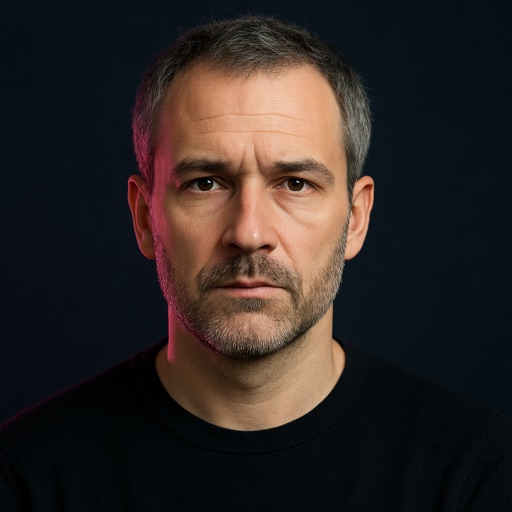
Sam Altman, CEO of OpenAI, said in an interview that his company will not go public in 2026. An IPO (Initial Public Offering, the first public sale of shares through which a private firm becomes publicly traded) will therefore, in his words, not come next year.
As the reason, Altman mentioned concerns tied to the safety of artificial intelligence. According to the source, Fortune editor-in-chief Alison Shontell took part in the interview, and in it Altman also spoke about the risks of AI development, about whether it will be possible to control more powerful models, and about the need for international regulation.
This is the core of the whole story. The rest is, for now, either context or open questions.
Why is this even news?
According to the source [1], OpenAI previously confidentially filed a Form S-1 with the U.S. SEC, a document by which a firm prepares to go public. A confidential filing is a common first step that, on its own, does not imply a commitment to an IPO or a date for it.
The combination of two things (the earlier preparatory step toward the market and the current public postponement of the IPO to another time) is exactly what makes the statement interesting. The company clearly considered entering the market, but is publicly communicating that it will not happen in 2026.
What does this mean from the perspective of a reader in Europe?
Charliedesk does not give advice on what to buy or sell, and OpenAI is moreover not a publicly traded company, so you cannot buy its shares on an exchange anyway. The practical impact lies elsewhere: OpenAI is one of the most closely watched entities in the entire AI sector, and its potential public listing would be a reference point for valuing the whole industry.
For European readers, the second half of Altman's remarks also matters, namely the mention of the need for international regulation. The European Union already has its own framework (the AI Act), so the statement by the head of the largest American AI firm about international rules is part of a broader debate that Europe is entering as a regulator.
What remains unknown
Here it is necessary to be honest. From the verified source it does not follow:
- When an IPO could theoretically come (2026 is ruled out, no further date is known).
- What specific safety conditions would have to be met for OpenAI to go public.
- How exactly the earlier confidential S-1 filing relates to the current decision to postpone the IPO.
- Whether this is a definitive strategy, or a stance that may change.
The three remaining materials that charliedesk had available concerned the cryptocurrency market (Bitcoin, TRX) and bring no facts to the OpenAI story. That is why we do not use them in this text as support for any claim.
What to watch out for with this type of news?
Executives' statements about IPO timing are best taken as a snapshot as of a given date, not as an unchanging plan. Companies move dates in both directions. What can be verified later: whether OpenAI really does not go public in 2026 (that is a concrete, checkable statement), and whether an official document or announcement appears that confirms or clarifies Altman's words.
Charliedesk is noting this statement and, in the event of an eventual IPO or another official statement by OpenAI, will return to it and compare it against reality.